Box breathing is a patterned breathing technique built on four equal phases. It slows the nervous system, restores CO2 balance, and is used by the military and emergency services to manage stress under pressure.
When I get stressed, I notice my breathing gets shallow and fast. Box breathing is my go-to technique to fix that. It’s almost annoyingly simple, but it works.
How To
Sit or lie down comfortably.
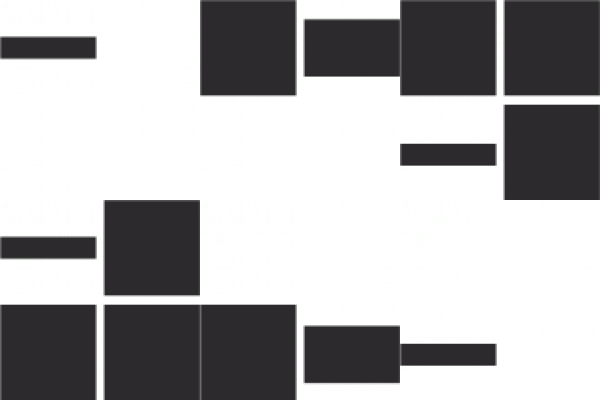
- Inhale. Inhale through your nose for 4 counts.
- Hold. Hold for 4 counts.
- Exhale. Exhale through your nose for 4 counts.
- Hold. Hold for 4 counts.
- Repeat. This marks one cycle, and you repeat for at least 5-15 minutes or until you feel calm and grounded again.
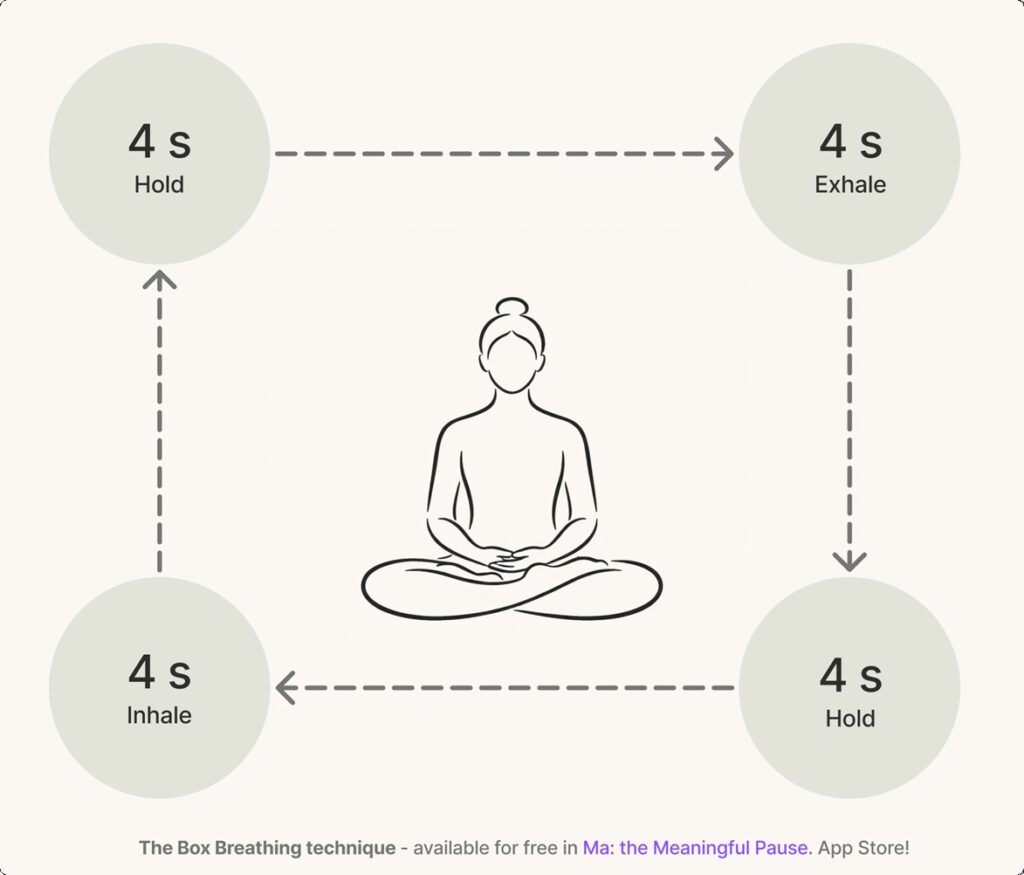
The important thing with this technique is that all four sides are equal. Thus the name: box breathing (or 4-4-4-4 as some call it).
If you want to practice square breathing without counting yourself, our totally free breathwork and meditation app Ma guides you through each cycle with audio cues. Just follow the rythm from the drum, and add ambient sound for extra relaxation. You can also use our simple online box breathing timer if you don’t have the time or feel the need for an app.
What to Expect
Within a few cycles most people notice their heart rate slowing down and their mind getting more quiet. It works fast. Some people feel slightly light-headed at first, especially if they’re not used to breath retention. Don’t worry, that goes away quickly.
What Happens in the Body
When you’re stressed, your breathing gets fast and shallow. This lowers CO2 in the blood, which signals danger to the brain and makes the stress worse. Box breathing interrupts that cycle.
The equal four-part rhythm brings CO2 and oxygen back into balance. Slow, diaphragmatic breathing activates the vagus nerve, which runs from the brainstem through the chest and abdomen. Vagus nerve stimulation shifts the nervous system toward parasympathetic activity, the rest and digest state, and away from fight or flight.
The breath holds amplify this. Retention after the inhale builds CO2 slightly, which helps oxygen release from the blood into the cells. Retention after the exhale creates a brief pause that deepens the calming effect.
Where It Comes From
Box breathing is the modern name for sama vritti pranayama, a yogic breathing technique. Sama means equal, vritti means flow or movement. The practice shows up in modern yoga as a preparatory technique before meditation, used to steady the mind before sitting still. I think it works quite well for anxiety and stress, but if I need to ground myself to sit for a long time in meditation I prefer Wim Hof.
The name box breathing came from the US military, specifically Navy SEALs, who uses it to manage stress and maintain performance in high-pressure situations. It’s also standard in emergency medicine and law enforcement for the same reason.
What the Research Shows
A 2023 randomized study published in Cell Reports Medicine compared box breathing, cyclic sighing, and cyclic hyperventilation against mindfulness meditation over one month. All three breathing techniques improved mood and reduced anxiety. Box breathing was effective, though cyclic sighing, which emphasizes a longer exhale, showed the strongest effect on mood and respiratory rate.
The takeaway is that box breathing works, and five minutes a day is enough to see results.
You can do it anywhere, sitting at your desk, before a meeting, or in bed before sleep. No equipment, no setup. The more you practice it, the faster it works when you actually need it.