Zen meditation is pretty minimalist by design. That’s also why it’s so hard, especially for beginners. But there are ways to ease into it.
Zen meditation is such a contrast. It’s so simple, but also way hard. What I like with it is the clean aesthetic: Sit down, shut up, pay attention.
The main practice in zen meditation is zazen, in which you sit upright with eyes slightly open and cast downward. And you just sit.
There is no mantra, no visualization, no object to focus on. You’re not trying to achieve anything or get anywhere. When thoughts arise you don’t chase them or push them away, you just let them pass.
That’s basically it, and that’s also why it’s considered hard for beginners. There’s nothing to hold onto. Most modern meditation apps and guides give you something to do with your attention. Zazen deliberately doesn’t.
Making Zen Meditation Beginner-friendly
A few entry points that are more beginner-friendly within the Zen tradition:
- Counting the breath is the classic starting point. You count each exhale from 1 to 10, then start over. When you lose count, you start over. It sounds simple and it is, but it’s surprisingly revealing how rarely you make it to 10 without the mind wandering.
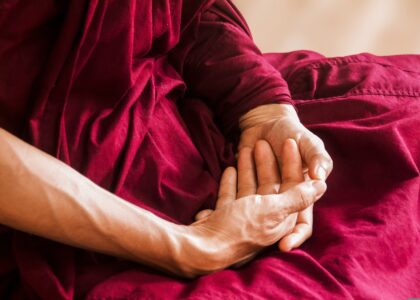
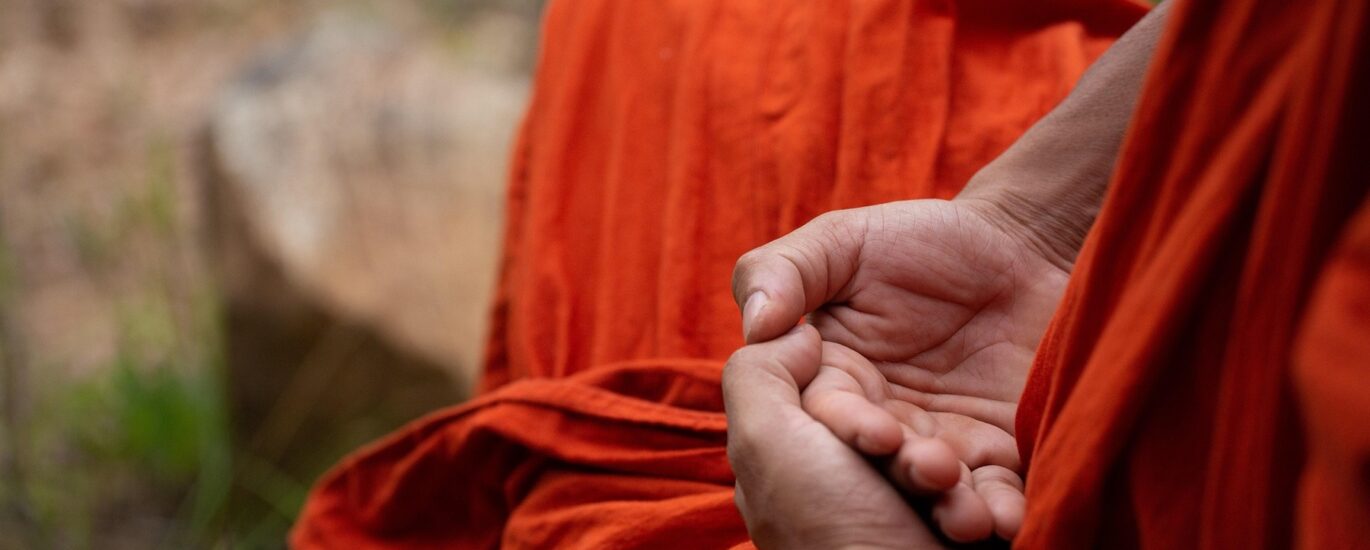
- Body posture because in Zen the posture is the practice. Spine upright, hands resting in your lap with the left hand sitting in the right and thumbs lightly touching, chin slightly tucked. This gives you something concrete and physical to focus on. Getting the posture right and holding it is its own form of attention training.
- Kinhin is walking meditation, done very slowly with full attention on each step. Often used between sitting periods. This one is easier for people who usually struggle with sitting still.
- Koan practice is more advanced but interesting: you’re given a paradoxical question like “what was your face before your parents were born?” and you sit with it. Not to solve it intellectually but to exhaust the thinking mind trying. I don’t recommend doing this on your own, it’s usually done under the guidance of a teacher.
For pure beginners, counting the breath is a great start. It’s boring in the best way, and that’s the point.
Most meditation traditions close the eyes, Zen keeps them open and soft. So sit with your eyes open and don’t get pulled into visual distraction, it’s its own skill and very Zen-specific.
Same concept, three different languages
Zen derives from Dhyana, which is a Sanskrit word that just means deep concentration or absorption in meditation. It’s the root word that traveled across Asia and changed pronunciation along the way: dhyana in India, chan in China, zen in Japan. So it’s the same concept at the core.
The Japanese Zen tradition then split into two main schools: Rinzai and Soto. both schools practice zazen, they just emphasize different things within it. Rinzai uses koan (sudden insight) as the primary method, Soto de-emphasizes koans and focuses on shikantaza ( just sitting without any goal).
Most of what the West thinks of as Zen aesthetics, like the minimalism, the gardens, the tea ceremony, that comes from the Soto tradition.